
Tree Trimming
Eds Tree & Landscaping
Professional Tree Trimming and Pruning Services in Weston, CT
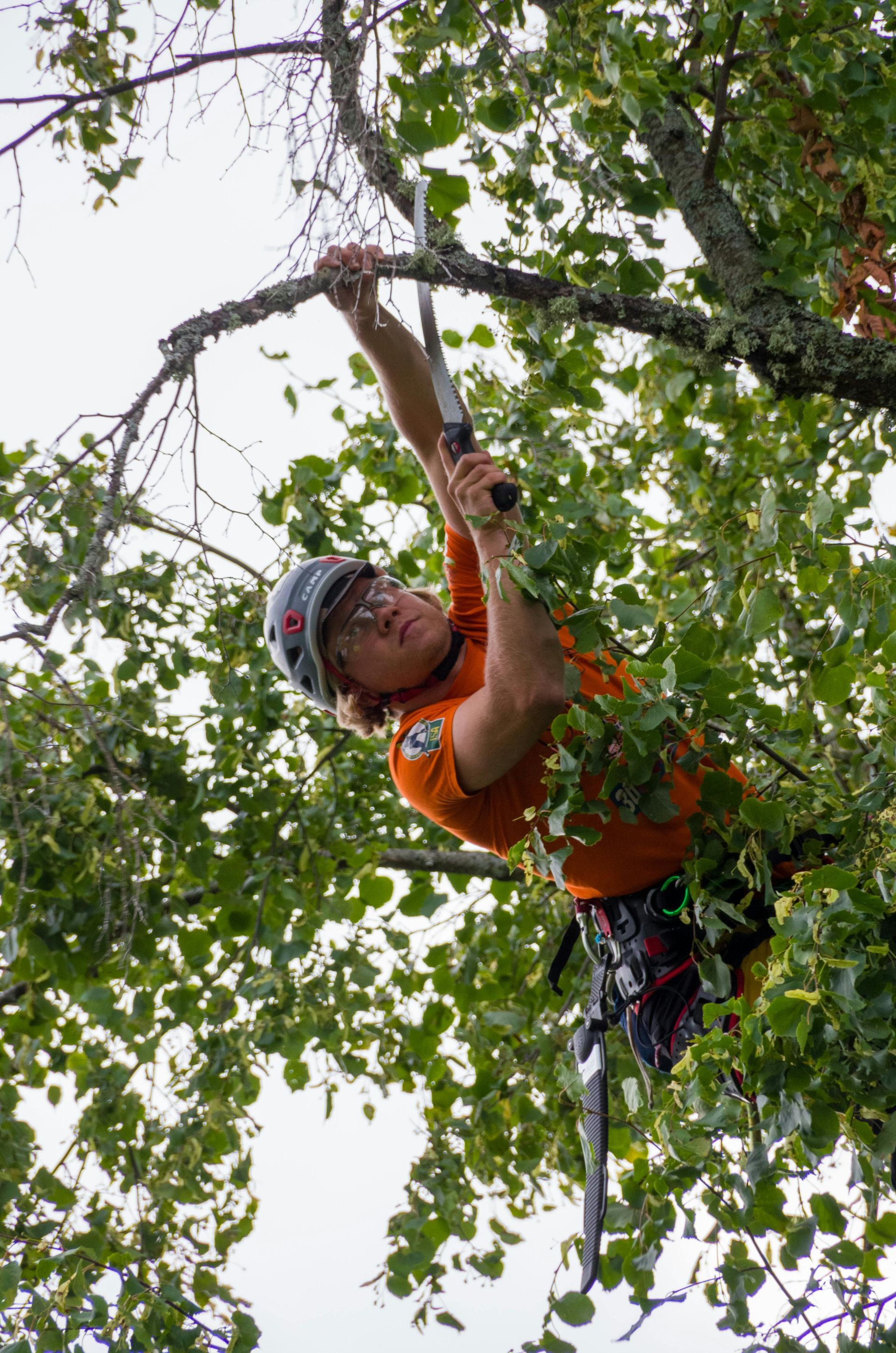
Proper tree trimming and pruning enhance tree health, reduce hazards, and improve aesthetics. Eds Tree & Landscaping offers expert tree trimming services tailored to Weston's native species and landscape conditions. Based at 7 Waterbury St, Weston, CT 06883, our arborist-trained technicians deliver pruning focused on structure, longevity, and safety for both residential and commercial properties.
Tree Trimming
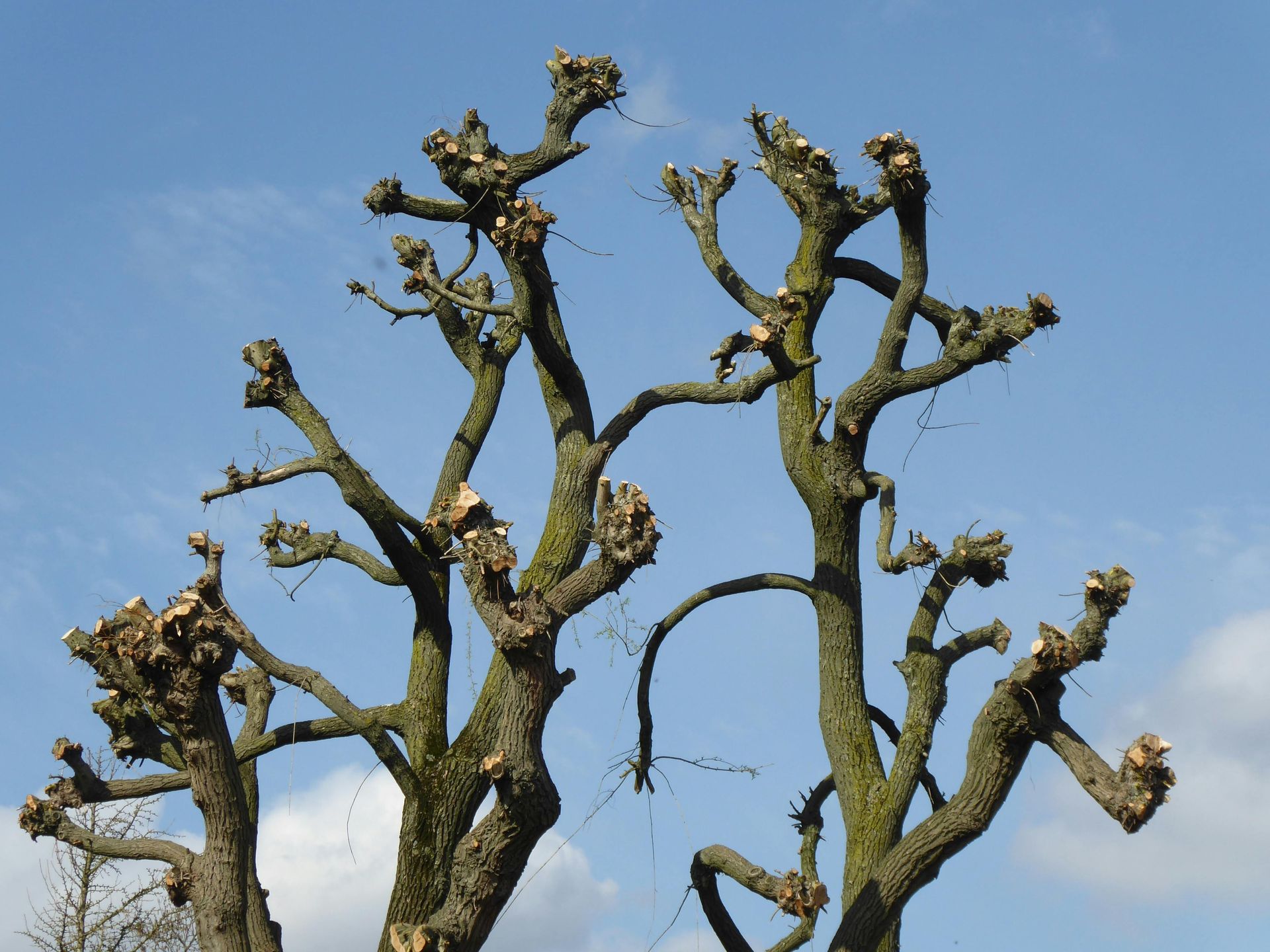
Trimming and pruning are precision tasks grounded in arboricultural science. Correct cuts promote wound closure, reduce pathogen entry, and shape growth to reduce future structural problems. Improper pruning—over-pruning, topping, or random cuts—can stress trees, invite decay, and shorten lifespans. Our approach is corrective and preventive, emphasizing long-term tree vigor and structural integrity.
Why Tree Trimming Matters
Health:
Removing dead or diseased wood reduces pathogen and insect spread, and increases light and airflow for remaining branches.
Safety:
Removing dead or diseased wood reduces pathogen and insect spread, and increases light and airflow for remaining branches.
Structure:
Early pruning corrects defects and trains trees to grow stronger, reducing the need for future corrective work or bracing.
Aesthetics:
Pruning enhances a tree’s natural form, improves appearance, and contributes to overall landscape character.
Utility Clearance:
Proper trimming prevents interference with power lines and infrastructure while maintaining clearances for safety.
Core Trimming Services
Crown Thinning
Selective removal of branches across the crown to increase light penetration and reduce wind resistance.
Crown Raising
Removing lower limbs to provide clearance for pedestrians, vehicles, and sightlines.ration and reduce wind resistance.
Crown Reduction
Reducing the size of a tree safely to avoid uncontrolled breakage and to manage tree location relative to structures.
Deadwooding
Removing dead branches to improve safety and reduce pest habitat.
Structural Pruning
Corrective pruning for young trees to establish strong branch architecture.
Hazard Mitigation
Removing or reducing hazardous limbs identified during risk assessments.
Our Pruning Philosophy and Techniques
Targeted Cuts
We make clean cuts at the branch collar to support healing and minimize decay.
Species-Specific Approach
Different species respond differently to pruning cuts and timing. We tailor techniques to species, season, and growth patterns.
Minimal Impact
We remove only what is necessary, focusing on preserving the tree’s natural form and long-term health.
Preservation-first
Where possible, we recommend pruning and bracing over removal to retain valuable canopy.
When to Trim Trees
Regular maintenance
every 3–5 years for many landscape trees—maintains structure and safety.
Immediate pruning
for storm-damaged or hazardous limbs.
Selective timing
for species that bleed sap (e.g., maples, birches) or when pruning during drier seasons helps reduce disease risk.
Young trees
benefit from formative pruning during the first several years to establish strong structure.
Assessments and Customized Plans
Our arborists perform a detailed assessment before recommending pruning. We consider:
- Tree age, species, health, and past pruning history.
- Structural concerns such as included bark, co-dominant stems, and previous storm damage.
- Site constraints including proximity to structures, power lines, and other plantings.
- Client goals such as aesthetic preferences, view management, or sunlight requirements.
Equipment and Safety
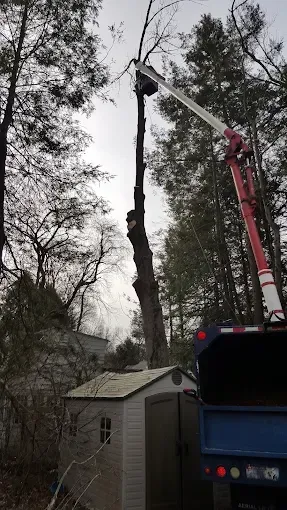
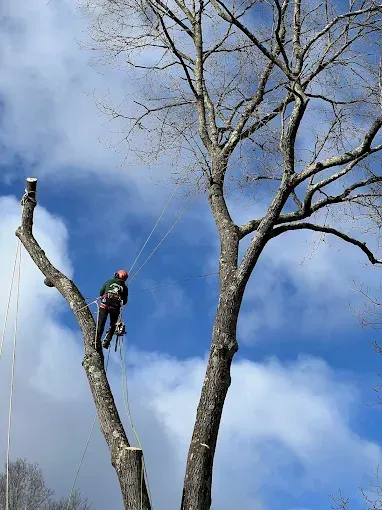
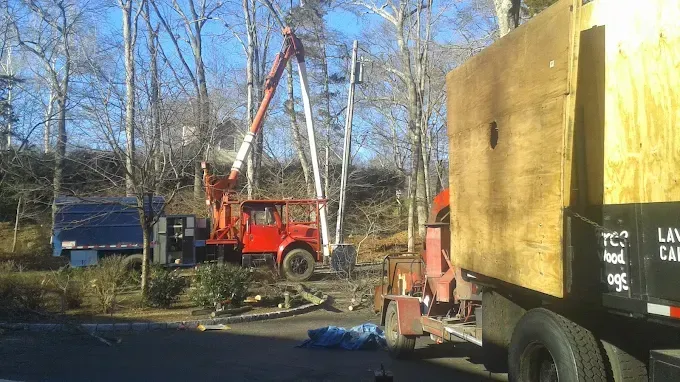
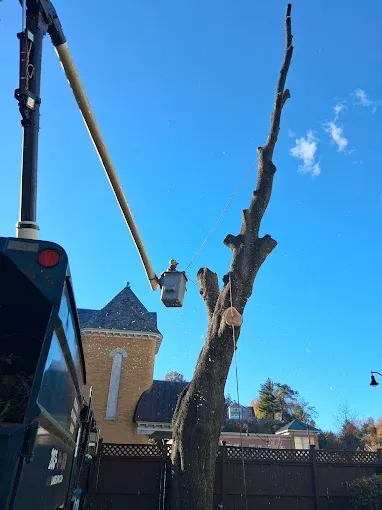
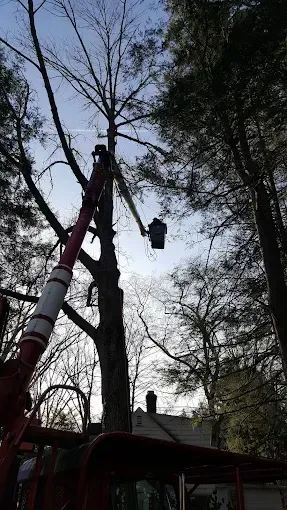
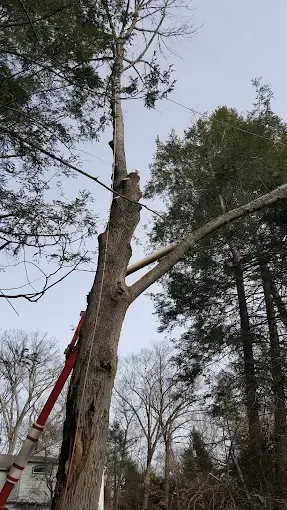
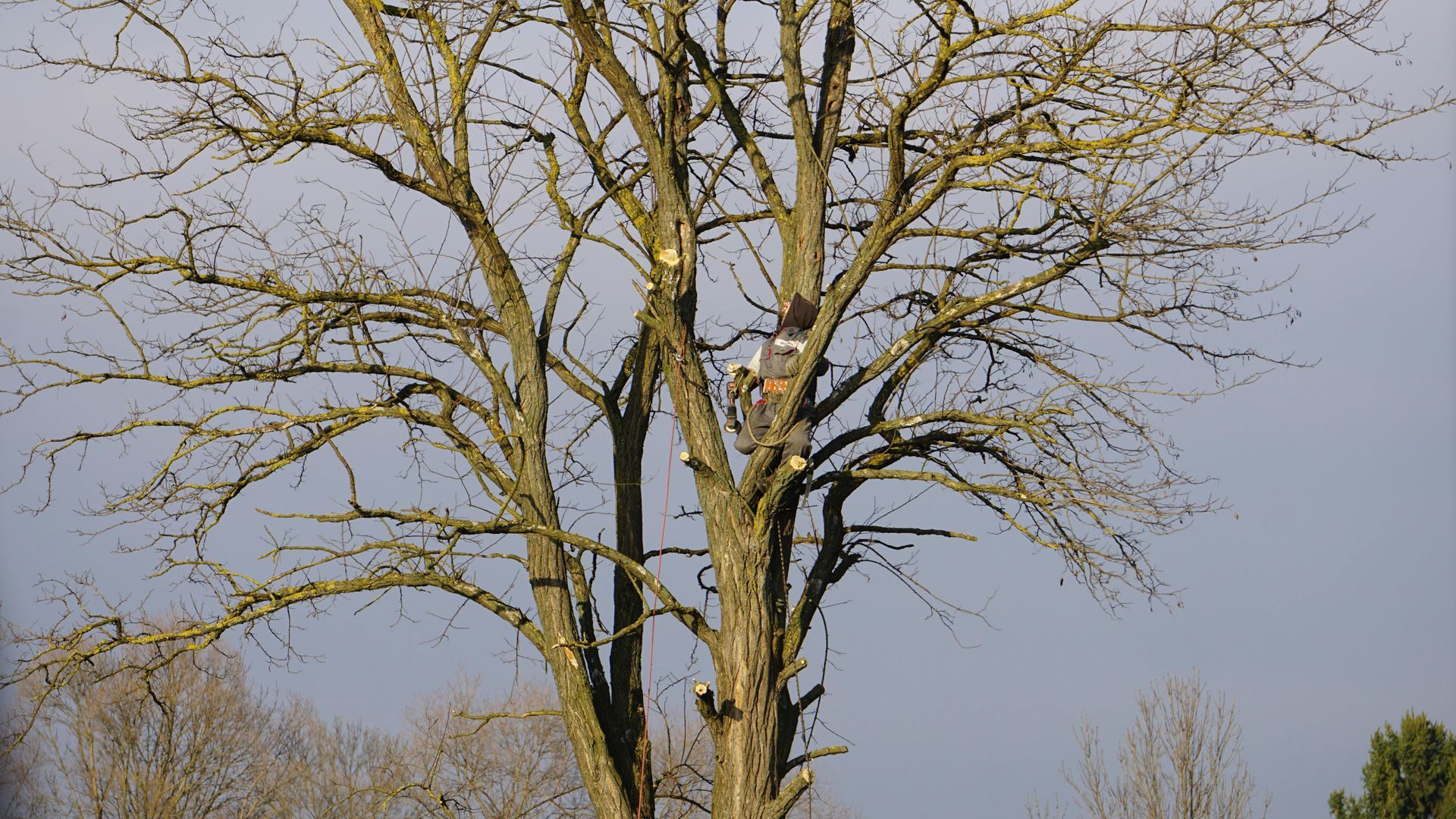
We use aerial lifts, climbing techniques, pruning saws, and chippers to perform clean, controlled cuts. Our crews adhere to ANSI safety standards and use appropriate PPE. For large or unsafe cuts, we employ rigging and sectional removal techniques to lower branches safely.
Benefits of Professional Pruning Over DIY
- Reduced risk of personal injury or property damage.
- Cuts that support tree health and reduce decay.
- Preservation of long-term value and reduced need for future emergency removals.
- Proper timing and technique that avoid unintended consequences like sucker growth or weak regrowth.
Environmental and Seasonal Considerations
Pruning has seasonal implications. For example:
- Late dormant season or early spring pruning can be effective for many deciduous trees.
- Summer pruning can be used for selective size control, particularly for species with vigorous growth.
- Some species should be pruned outside active disease/insect cycles to minimize pathogen spread; our arborists advise on optimal timing.
Frequently Asked Question
How much does tree pruning cost?
Pricing depends on tree size, complexity, and accessibility. We provide transparent, itemized estimates after an on-site evaluation.
How often should my trees be pruned?
Many mature landscape trees benefit from an inspection and light pruning every 3–5 years. Young trees require formative pruning more frequently in the early years.
Will pruning harm my tree?
When done correctly, pruning promotes health and safety. Improper cuts can harm trees; that’s why professional pruning is recommended.
Can you trim around power lines?
Work near power lines requires coordination with utilities and specialized crews. We advise and coordinate when utility line clearance is necessary.
Do you take care of shrubs and hedges too?
Yes; we offer hedge trimming, shrub shaping, and renewal pruning as part of our landscape services.
Contact and Scheduling
To schedule expert tree trimming or to request a pruning assessment, call (203) 648-1522. We provide a free consultation and clear recommendations tailored to your property’s needs.